
Track: Shoulder and Elbow Reconstruction
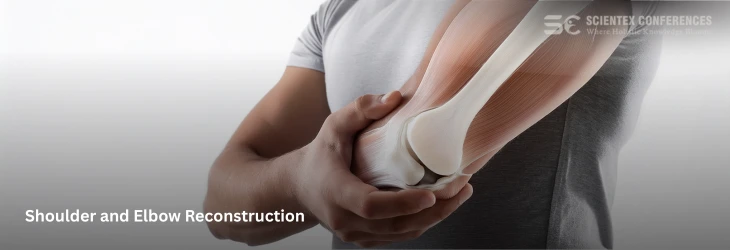
While hip and knee arthroplasty have historically dominated the literature, shoulder and elbow reconstruction has emerged as a rapidly advancing subspecialty, closely connected to broader innovations discussed in implant design, biomaterials, and biomechanics. This session offers a comprehensive update on current best practices in upper-extremity joint reconstruction.
Key Topics and Highlights:
Reverse Total Shoulder Arthroplasty: This technique has transformed treatment for rotator cuff tear arthropathy and complex fractures. This sub-topic examines current indications, implant positioning, and outcomes data.
Anatomic Shoulder Arthroplasty: For patients with preserved rotator cuff function, anatomic replacement remains a key option. This sub-topic compares outcomes and indications relative to reverse arthroplasty.
Revision Strategies for Failed Shoulder Arthroplasty: Managing a failed shoulder implant requires specialized technique, echoing broader principles from revision arthroplasty and complication management. This sub-topic addresses current revision approaches.
Total Elbow Arthroplasty and Reconstruction: Post-traumatic arthritis and rheumatoid disease are common indications for elbow reconstruction. This sub-topic covers implant options and outcomes across patient populations.
Managing Complex Elbow Instability and Trauma: Distal humerus fractures and chronic instability present unique reconstructive challenges. This sub-topic explores current surgical strategies for restoring elbow function.
If your research contributes to shoulder or elbow reconstruction, we welcome you to submit an abstract and share your work with specialists advancing this growing area of arthroplasty.
Scientific Highlights
- Advances in Hip and Knee Arthroplasty
- Implant Design, Biomaterials, and Biomechanics
- Revision Arthroplasty and Complication Management
- Shoulder and Elbow Reconstruction
- Foot and Ankle Surgery
- Robotic and Computer Assisted Orthopedic Surgery
- Minimally Invasive and Arthroscopic Techniques
- 3D Printing and Digital Technology in Orthopedic Surgery
- Artificial Intelligence and Data Driven Orthopedics
- Regenerative Medicine and Stem Cell Therapy in Orthopedics
- Arthritis, Osteoporosis, and Degenerative Joint Disease
- Orthopedic Oncology
- Pediatric Orthopedics
- Geriatric Orthopedics and Bone Metabolic Disorders
- Sports Medicine and Soft Tissue Injuries
- Orthopedic Trauma and Fracture Management
- Spine and Spinal Disorders
- Orthopedic Rehabilitation and Physiotherapy
- Orthopedic Pain Management and Anesthesia
- Ethics, Patient Safety, and Value Based Orthopedic Care
- Innovations and Future Directions in Arthroplasty

Organization Location
1309 Coffeen Avenue, STE 1200, Sheridan, Wyoming 82801, USA
General Enquiry
contact@scientexconferences.com
Finance Enquiry
finance@scientexconferences.com
Call us at
USA : (+1) 914 520 5013