
Track: Implant Design, Biomaterials, and Biomechanics
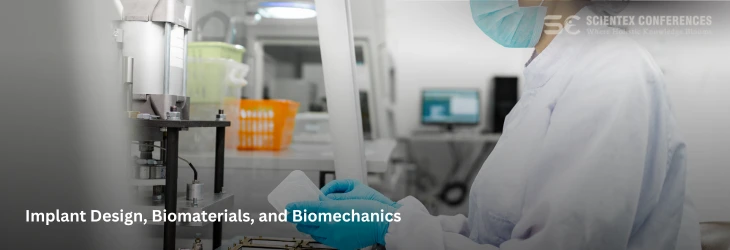
Every advance in arthroplasty ultimately traces back to the materials and engineering decisions made long before a surgeon enters the operating room. This session is dedicated to the science of implant design, closely linked to ongoing developments in hip and knee arthroplasty and the expanding use of 3D printing and digital technology in creating patient-specific implant solutions.
Key Topics and Highlights:
Materials Science in Modern Implants: Advances in metal alloys, cross-linked polyethylene, and ceramic bearing surfaces continue to improve wear resistance and biocompatibility. This subtopic reviews current material innovation across major implant categories.
Surface Engineering and Osseointegration: Coating technologies designed to promote bone ingrowth directly affect implant fixation and longevity. This subtopic examines current evidence on porous and bioactive surface treatments.
Biomechanical Testing and Load Analysis: Understanding how implants respond to real-world stress is essential to predicting failure modes. This subtopic covers finite element analysis and physical testing methods used in implant validation.
Computational Modeling and Digital Simulation: Digital tools are shortening implant development timelines and enabling more precise design iteration. This sub-topic explores how simulation technology is reshaping the path from concept to clinical product.
From Design to Regulatory Approval: Bringing a new implant to market requires navigating rigorous testing and regulatory standards. This subtopic addresses the collaborative process connecting engineers, researchers, and regulatory bodies.
If your work advances implant materials, biomechanics, or design methodology, we welcome you to submit an abstract and contribute your research to a global forum shaping the next generation of orthopedic implants.
Scientific Highlights
- Advances in Hip and Knee Arthroplasty
- Implant Design, Biomaterials, and Biomechanics
- Revision Arthroplasty and Complication Management
- Shoulder and Elbow Reconstruction
- Foot and Ankle Surgery
- Robotic and Computer Assisted Orthopedic Surgery
- Minimally Invasive and Arthroscopic Techniques
- 3D Printing and Digital Technology in Orthopedic Surgery
- Artificial Intelligence and Data Driven Orthopedics
- Regenerative Medicine and Stem Cell Therapy in Orthopedics
- Arthritis, Osteoporosis, and Degenerative Joint Disease
- Orthopedic Oncology
- Pediatric Orthopedics
- Geriatric Orthopedics and Bone Metabolic Disorders
- Sports Medicine and Soft Tissue Injuries
- Orthopedic Trauma and Fracture Management
- Spine and Spinal Disorders
- Orthopedic Rehabilitation and Physiotherapy
- Orthopedic Pain Management and Anesthesia
- Ethics, Patient Safety, and Value Based Orthopedic Care
- Innovations and Future Directions in Arthroplasty

Organization Location
1309 Coffeen Avenue, STE 1200, Sheridan, Wyoming 82801, USA
General Enquiry
contact@scientexconferences.com
Finance Enquiry
finance@scientexconferences.com
Call us at
USA : (+1) 914 520 5013