
Track: Minimally Invasive and Arthroscopic Techniques
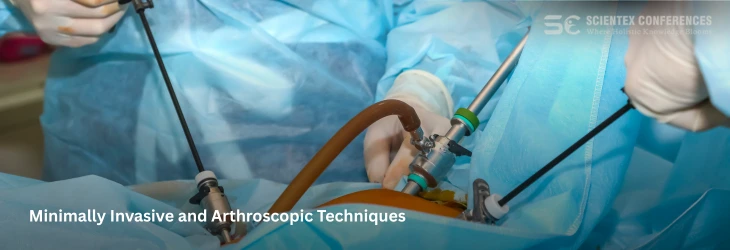
The shift toward minimally invasive and arthroscopic techniques reflects a broader movement in orthopedics toward reducing tissue trauma while preserving surgical outcomes. This session builds on themes explored in robotic and computer-assisted orthopedic surgery, examining current approaches across joint replacement, joint preservation, and soft-tissue procedures.
Key Topics and Highlights:
Minimally Invasive Approaches to Arthroplasty: Muscle-sparing surgical approaches aim to reduce recovery time while maintaining implant accuracy. This subtopic reviews current techniques and outcomes evidence.
Knee and Shoulder Arthroscopy: Advances in arthroscopic instrumentation continue to expand treatment options for meniscal, ligamentous, and rotator cuff pathology, connecting to themes in sports medicine and soft tissue injuries. This subtopic covers current techniques.
Hip Arthroscopy for Impingement and Labral Repair: Hip arthroscopy has become an established treatment for femoroacetabular impingement. This subtopic addresses current indications and outcomes data.
Percutaneous Techniques in Trauma Surgery: Minimally invasive fixation methods are increasingly applied in select fracture patterns, linking to orthopedic trauma and fracture management. This subtopic examines the balance between reduced trauma and adequate fixation.
Training and the Minimally Invasive Learning Curve: These techniques require specialized skill development. This subtopic addresses training and credentialing considerations for surgeons adopting a minimally invasive practice.
If your research advances minimally invasive or arthroscopic techniques, we welcome you to submit an abstract and share your work with surgeons focused on reducing surgical trauma without compromising outcomes.
Scientific Highlights
- Advances in Hip and Knee Arthroplasty
- Implant Design, Biomaterials, and Biomechanics
- Revision Arthroplasty and Complication Management
- Shoulder and Elbow Reconstruction
- Foot and Ankle Surgery
- Robotic and Computer Assisted Orthopedic Surgery
- Minimally Invasive and Arthroscopic Techniques
- 3D Printing and Digital Technology in Orthopedic Surgery
- Artificial Intelligence and Data Driven Orthopedics
- Regenerative Medicine and Stem Cell Therapy in Orthopedics
- Arthritis, Osteoporosis, and Degenerative Joint Disease
- Orthopedic Oncology
- Pediatric Orthopedics
- Geriatric Orthopedics and Bone Metabolic Disorders
- Sports Medicine and Soft Tissue Injuries
- Orthopedic Trauma and Fracture Management
- Spine and Spinal Disorders
- Orthopedic Rehabilitation and Physiotherapy
- Orthopedic Pain Management and Anesthesia
- Ethics, Patient Safety, and Value Based Orthopedic Care
- Innovations and Future Directions in Arthroplasty

Organization Location
1309 Coffeen Avenue, STE 1200, Sheridan, Wyoming 82801, USA
General Enquiry
contact@scientexconferences.com
Finance Enquiry
finance@scientexconferences.com
Call us at
USA : (+1) 914 520 5013