

Track: 3D Printing and Digital Technology in Orthopedic Surgery
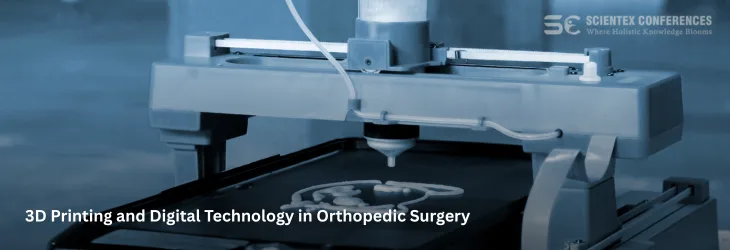
Additive manufacturing and digital planning technology have opened new possibilities in orthopedic surgery, building directly on advances discussed in implant design, biomaterials, and biomechanics. This session examines current applications of 3D printing and digital technology across complex reconstruction and revision surgery.
Key Topics and Highlights:
Patient-Specific 3D-Printed Implants: Standard implants cannot always address unique bone anatomy. This sub-topic covers custom implant design for complex acetabular reconstruction and cases connected to orthopedic oncology limb-salvage surgery.
3D-Printed Surgical Guides: Custom cutting and drilling guides aim to improve surgical accuracy. This sub-topic reviews evidence comparing patient-specific instrumentation to conventional technique.
Digital Preoperative Planning and Templating: Advanced imaging-based software allows precise implant sizing and positioning planning before surgery. This sub-topic explores current digital planning workflows.
Manufacturing Workflow and Regulatory Pathways: Bringing a patient-specific device to the operating room requires a coordinated design-to-production pipeline. This sub-topic addresses regulatory considerations that vary across global markets.
Cost and Access Considerations for Custom Devices: Production time and expense remain barriers to wider adoption. This sub-topic examines strategies for expanding access to patient-specific technology globally.
If your research advances 3D printing or digital planning in orthopedic surgery, we welcome you to submit an abstract and share your work shaping increasingly personalized approaches to joint reconstruction.
Scientific Highlights
- Advances in Hip and Knee Arthroplasty
- Implant Design, Biomaterials, and Biomechanics
- Revision Arthroplasty and Complication Management
- Shoulder and Elbow Reconstruction
- Foot and Ankle Surgery
- Robotic and Computer Assisted Orthopedic Surgery
- Minimally Invasive and Arthroscopic Techniques
- 3D Printing and Digital Technology in Orthopedic Surgery
- Artificial Intelligence and Data Driven Orthopedics
- Regenerative Medicine and Stem Cell Therapy in Orthopedics
- Arthritis, Osteoporosis, and Degenerative Joint Disease
- Orthopedic Oncology
- Pediatric Orthopedics
- Geriatric Orthopedics and Bone Metabolic Disorders
- Sports Medicine and Soft Tissue Injuries
- Orthopedic Trauma and Fracture Management
- Spine and Spinal Disorders
- Orthopedic Rehabilitation and Physiotherapy
- Orthopedic Pain Management and Anesthesia
- Ethics, Patient Safety, and Value Based Orthopedic Care
- Innovations and Future Directions in Arthroplasty

Organization Location
1309 Coffeen Avenue, STE 1200, Sheridan, Wyoming 82801, USA
General Enquiry
contact@scientexconferences.com
Finance Enquiry
finance@scientexconferences.com
Call us at
USA : (+1) 914 520 5013