
Track: Geriatric Orthopedics and Bone Metabolic Disorders
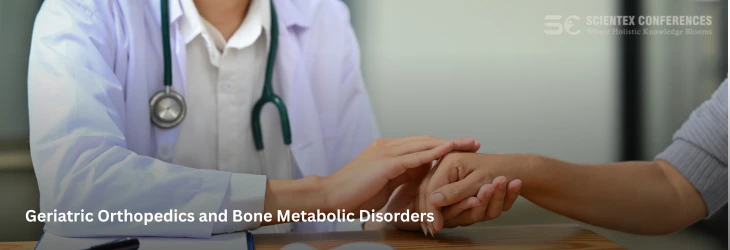
As global populations continue to age, the orthopedic care of older adults has become an increasingly specialized area of practice. This session builds on themes explored in arthritis, osteoporosis, and degenerative joint disease, focusing on fragility fracture management and bone metabolic health.
Key Topics and Highlights:
Hip Fracture Management in Older Adults: Timing and technique significantly affect survival and recovery. This sub-topic reviews current evidence-based surgical approaches, connecting to orthopedic trauma and fracture management.
Orthogeriatric Co-Management Models: Collaborative care between orthopedic surgeons and geriatric specialists reduces complications. This sub-topic examines outcomes data from structured co-management programs.
Osteoporosis Treatment and Fracture Prevention: Initiating bone health treatment after a first fragility fracture reduces future fracture risk. This sub-topic addresses current treatment gaps and guidelines.
Surgical Decision-Making in Frail Patients: Balancing surgical risk against functional benefit is central to geriatric care. This sub-topic explores shared decision-making frameworks for complex, frail patients.
Fall Prevention and Functional Independence: Preserving mobility and independence remains a central goal of geriatric orthopedic care. This sub-topic addresses multidisciplinary strategies supporting long-term function.
If your research addresses geriatric orthopedic care or bone metabolic health, we welcome you to submit an abstract and contribute to a growing and increasingly vital area of the field.
Scientific Highlights
- Advances in Hip and Knee Arthroplasty
- Implant Design, Biomaterials, and Biomechanics
- Revision Arthroplasty and Complication Management
- Shoulder and Elbow Reconstruction
- Foot and Ankle Surgery
- Robotic and Computer Assisted Orthopedic Surgery
- Minimally Invasive and Arthroscopic Techniques
- 3D Printing and Digital Technology in Orthopedic Surgery
- Artificial Intelligence and Data Driven Orthopedics
- Regenerative Medicine and Stem Cell Therapy in Orthopedics
- Arthritis, Osteoporosis, and Degenerative Joint Disease
- Orthopedic Oncology
- Pediatric Orthopedics
- Geriatric Orthopedics and Bone Metabolic Disorders
- Sports Medicine and Soft Tissue Injuries
- Orthopedic Trauma and Fracture Management
- Spine and Spinal Disorders
- Orthopedic Rehabilitation and Physiotherapy
- Orthopedic Pain Management and Anesthesia
- Ethics, Patient Safety, and Value Based Orthopedic Care
- Innovations and Future Directions in Arthroplasty

Organization Location
1309 Coffeen Avenue, STE 1200, Sheridan, Wyoming 82801, USA
General Enquiry
contact@scientexconferences.com
Finance Enquiry
finance@scientexconferences.com
Call us at
USA : (+1) 914 520 5013